Resources
The King Makers Resource Hub
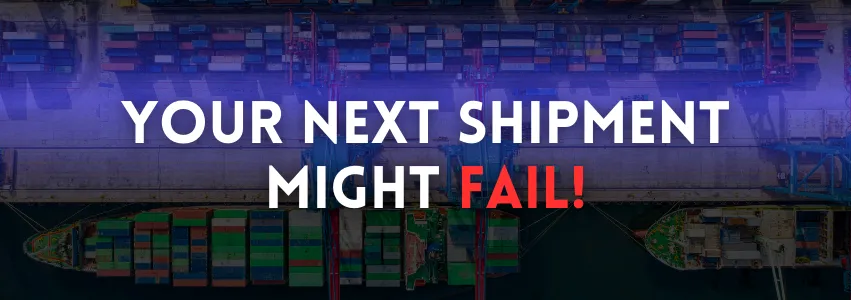
Amazon Ended U.S. FBA Prep Services — Here’s What to Do Now (So Your Next Shipment Doesn’t Get Messy)
If you’re reading this in February 2026, you’re officially in the after timeline. And it matters.
Amazon ended U.S. FBA prep and item labeling services on January 1, 2026. The quiet safety net sellers relied on for years is gone. No more Amazon handling your poly bagging. No more bubble wrapping. No more taping loose bundles. No more last minute labeling fixes.
What used to be corrected at the fulfillment center now becomes your responsibility before the shipment ever leaves your hands.
And the impact is not dramatic. It is operational.
It shows up in the most frustrating place possible: inbound shipments.
The Situation Most Sellers Are in Right Now
Most sellers did not feel anything on January 1.
They felt it on the first shipment after that date where something was slightly off. The wrong poly bag thickness. A missing suffocation warning. A barcode that exists but is placed poorly. A loose bundle that shifts in transit. The wrong FNSKU decision.
Nothing catastrophic.
Just slightly wrong.
And slightly wrong is enough.
You do not see the damage immediately. You feel it when check in slows down. When inventory partially receives. When units move into investigation status. When your restock cadence becomes inconsistent.
Suddenly you are asking why your shipment is still not fully received. Why PPC costs are climbing. Why you are running close to stockout even though you shipped “on time.”
Inbound friction is not loud. It is silent and expensive.
Action Steps
Open your last three shipments and compare receiving timelines before and after January 1.
Pull your inbound performance reports and look for discrepancies tied to prep or labeling.
Physically inspect one unit of each top SKU as if you were Amazon receiving staff. Check barcode clarity. Check bag thickness. Check suffocation warnings. Check bundle tightness.
Do not assume compliance. Verify it.
Why This Matters Beyond Prep Work
This is not about buying more bags.
This is an inbound compliance shift.
When prep and labeling are not handled correctly before units hit Amazon, you introduce friction into receiving. Friction slows availability. Slow availability increases stockout risk.
And stockouts are not just annoying.
When you go out of stock, your PPC efficiency drops. Your organic rank weakens. Keyword history resets. When inventory returns, you are rebuilding instead of scaling.
Speed inside FBA is leverage.
When receiving slows, your entire growth engine slows with it.
Action Steps
Track days from shipment creation to fully received status. Make it a weekly KPI.
Increase your restock buffer temporarily if your inbound performance is unstable.
Adjust PPC bids if inventory is tight during delayed receiving periods.
Protect ranking momentum while you stabilize operations.
The Simple Shift You Need to Make
The new rule is simple.
Your units must arrive FBA ready.
That means one consistent owner of prep and labeling. Either your factory, your internal team, or a third party prep center.
The mistake many sellers are making right now is inconsistency. One shipment prepped by the supplier. The next adjusted in house. The next partially corrected by a prep center.
Variation creates errors.
Errors create delays.
Delays create revenue volatility.
Consistency beats convenience.
Action Steps
Choose your lane for each SKU. Factory prep, in house prep, or 3PL prep.
Write down who is responsible for labeling, packaging, verification, and final sign off.
Require photo proof before shipment dispatch. Close ups of barcode placement. Poly bag sealing. Carton labeling.
Standardize before you scale.
What We Recommend Doing This Week
Start with your top SKUs. The ones driving most of your revenue.
Identify which consistently trigger prep requirements. Poly bag plus suffocation warning. Protective packaging. Secure taping for multipacks. Bundle integrity. Correct barcode selection.
Then create a simple one page prep standard per SKU.
It should include product name and SKU. Required packaging. Label type and placement. Carton requirements. Clear example photos.
Nothing complex.
Just clear.
Clarity removes ambiguity.
Action Steps
Block two focused hours to document your top five SKUs.
Create a shared folder per SKU with standards and approved reference photos.
Send the document to whoever owns prep and confirm understanding.
Before your next shipment leaves, request updated execution photos and compare against the standard.
Eliminate almost right shipments before they cost you time.
Do Not Overbuild It. Lock in a Repeatable Workflow
You do not need a complicated system.
You need a repeatable one.
Pick the lane. Document it. Set a minimum quality bar.
If you replenish regularly, you will feel the difference quickly. Fewer shipment problems. Cleaner check ins. Fewer support cases. Less reactive stress.
Operational stability compounds.
Action Steps
Create a three step outbound checklist before dispatch. Packaging verified. Label placement verified. Carton labeling verified.
Assign one final approver per shipment.
Review inbound performance monthly and refine standards if issues appear.
Keep it simple. Keep it consistent.
The Bigger Picture
Amazon did not remove prep services to create chaos.
They shifted responsibility back to sellers.
Sellers who treat this as a minor inconvenience will keep fighting inbound friction.
Sellers who treat this as a systems upgrade will gain predictability, speed, and stronger in stock performance.
This is one of those quiet operational shifts that separates fragile sellers from durable brands.
Inbound discipline is now a competitive advantage.
Book a Call and We Will Map This to Your Business
If you want help tightening this up without guessing, book a call with our team.
We will review your SKUs, supply chain, and current prep flow. We will help you choose the right structure factory versus prep center versus in house.
We will help you build simple SKU level prep standards and an inbound tracking dashboard that fits your operation.
Your next shipment should move cleanly.
👉 Book a call with our experts and we will build the plan with you.

Free Courses


Course 1
Amazing thing you get lorem ipsum
Great bonus you get lorem ipsum
Amazing thing you get lorem ipsum
Great bonus you get lorem ipsum
Course 2
Amazing thing you get lorem ipsum
Great bonus you get lorem ipsum
Amazing thing you get lorem ipsum
Great bonus you get lorem ipsum
COMPANY
CUSTOMER CARE
LEGAL
FOLLOW US


Copyright 2026. Kingmakers DFY. All Rights Reserved.